Supply Chain Management – Week #3 Lecture
DoD Fullfillment Considerations
End-customer satisfaction is predicated upon
establishing an effective and efficient fulfillment process to meet company strategic
and SCM goals. This lecture relates the general steps used by the Department of
Defense (DoD) in supporting material fulfillment demands and requirements in
support of the warfighter. Overarching order fulfillment categories examined
include the supply chain design, order fulfillment and the associated tenets,
as well as fulfillment strategies.
Supply Chain Design
Order fulfillment
predecessors are developed based upon the supply chain design and business
model executed. The supply chain is constantly evolving based on the product or
service life cycle, while balancing the Key Performance Parameters (KPPs) and
Key System Attributes (KSAs), making a product appealing or desirable to the
consumer. As a logistics and supply manager, you will find multiple systems or
product lines furnished at different stages of the life cycle. The product life
cycle includes the introduction, growth, maturity, and decline phases as
illustrated in figure one below.
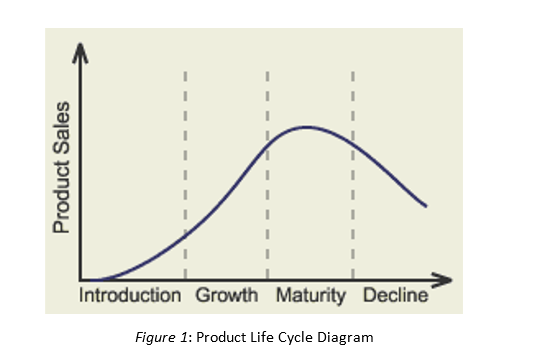
The introduction or
embryonic period is derived based on innovative new ideas or incremental
changes. This is the most critical period in the life cycle as the product
quality and pricing significantl affect long-term
promotion and distribution results. SCM personnel work very closely with
marketing to align with the marketing mix, which is the product, price, place,
and promotion. For example, HTC Samsung, and Apple smart phones reflect
incremental modernization developments over an annual period due to intense
pressure on growth and maturity phases shortening the life cycle. In contrast,
the Boeing B-52 Stratofortress has been operational since 1948, and includes
minor incremental changes based on a solid design with an innate ability to
integrate newer technologies to continue performing the military mission.
Business models
further propagate supply chain actions to fulfill multiple strategic goals and
objectives. There are four primary business models to consider including
Business-to-Business (B2B) Business-to-Customer (B2C), Peer-to-Peer (P2P), and
Customer-to-Business (C2B). A good supply chain program normally incorporates
multiple business models to determine what the competition is doing, strengths
and weaknesses, integrated distribution channels with partners or alliances,
and gaining feedback from customers to maximize product or service
supportability.
Lastly, each of the business models employed
encompass a product reliability curve and associated failure rates, while
comparing organic (internal) production versus outsourcing aligned with
ownership short and long-term goals, organization core advantages to outpace
competitors, and quantitative results associated with the life cycle support
schedules.
Order Fulfillment
Order fulfillment
definitions differ based on the business model and tailored supportability
requirements to meet organizational goals. Common order fulfillment elements
consists of purchase and receiving, inventory management, transportation
management, and order processing, as well as returns processing. Each element
or Area of Responsibility (AOR) sponsors an incredible amount of planning and
organizing to implement an effective fulfillment process. Fawcett, Ellram, and Ogden denote the functional components of the
physical supply chain flow which aligns with the Supply-Chai
Operation Reference (SCOR), which is the most common template used across the
world.
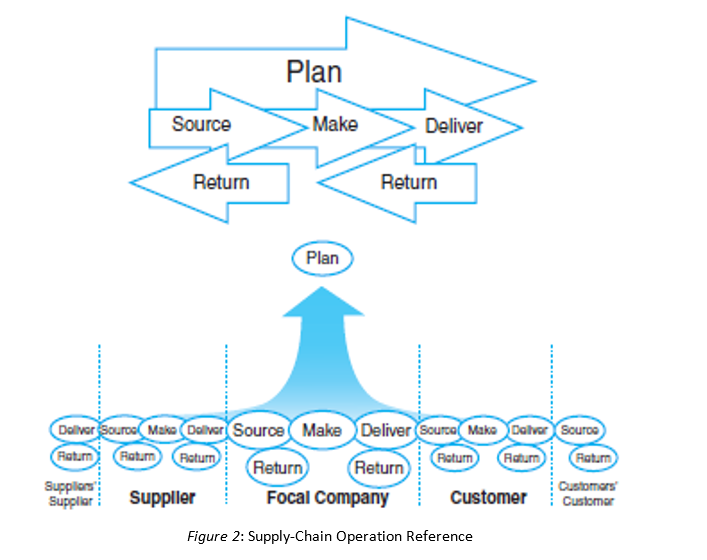
Each element
associated with the order fulfillment process correlates to the SCOR framework
to meet push and pull demand requirements.
Receiving
Despite the organic
or outsourcing methodologies, receiving inventory from manufacturers or
suppliers is the first step in distributing products to consumers. Common steps
include counting items, inspecting inventory, and using warehousing management
software to assist in accounting for Stock Keeping Units (SKUs). An essential
function includes the process mapping and training of employees as invoices
must be paid, materials accounted for, and databases reconciled to reflect the
hundreds to thousands of products received daily. An example process flow I
created is depicted below to illustrate the intricacies of receiving IT
hardware assets associated with the OCONUS Navy Enterprise Network (ONE-NET).
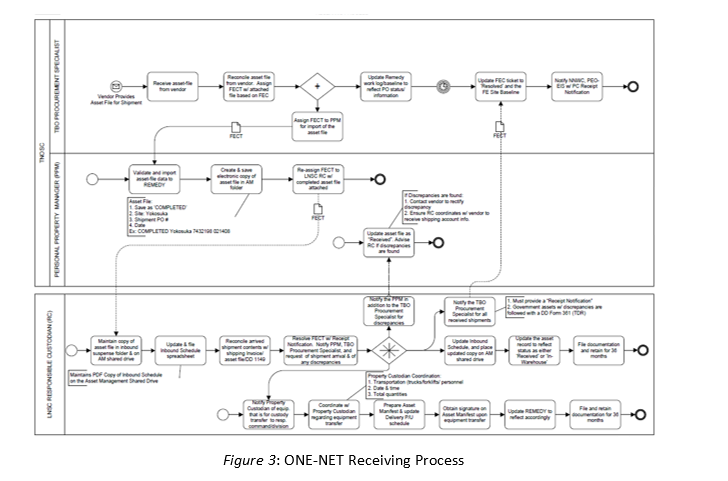
It is not essential
to understand every step, but to comprehend the stakeholder dependencies and
correlations required to ensure accurate receipt of materials to fulfill
customer demand needs. The ONE-NET receiving process example accounts for 127
full inventory turnover cycles per annum valued at $1.2 billion.
Packaging, Handling, Storage, and Transportation (PHS&T)
Behind material
management and fulfillment operations are procedures that ensure support items
are properly preserved, appropriately packaged, marked, stored and handled, as
well as transported for short and long-term requirements. Based on seasonal or
environmental differences (humid versus dr
climate) tailoring the preservation,
packaging, and storage requirements is based on support item type and category
classification. Part and shipping configurations play a key role in determining
the transportation mode and networks available.
Intermodal transportation considerations
include air, rail, ship, motor, and pipeline to include unique differences when
considering international requirements.
Key considerations
for PHS&T include:
·
Design,
item configuration, hazardous and sensitive materials Security
·
Procedures
to meeting special handling needs Spares or repair parts
·
Technologies
and methods to optimize processes Environmental concerns and legal requirements
Inventory planning must
integrate optimized fulfillment software as the packing station conducts
quality control checks, scans items, and packing slips prior to sealing the
box. There are a variety of inventory methods and technologies, such as Radio
Frequency (RFID), hand-scanners, or simple hand and eye validation for smaller
inventory counts. Lastly, packaging plays an essential role with consumers as
the product and promotional activities correlate to appeal and desire, followed
by consumer buying behaviors.
Order Processing
As e-business
platforms have evolved, online work requests, new orders, and maintenance are
most often scheduled through an e-order. The fulfillment software associated
with the consumers cart allows orders to be automatically received and
processed. Several processing methodologies exists a some companies, such as
Amazon, Wal-Mart, or Target use robotics to pull the item from storage and
process the specific order from the shipping line. The military uses
intermediate process applications with a warehouse locator system, in which
items are identified, pulled, and personally packaged upon being inspected.
Despite the methodology employed, proper packaging and shipping considerations t meet the customer needs are essential during the order
process.
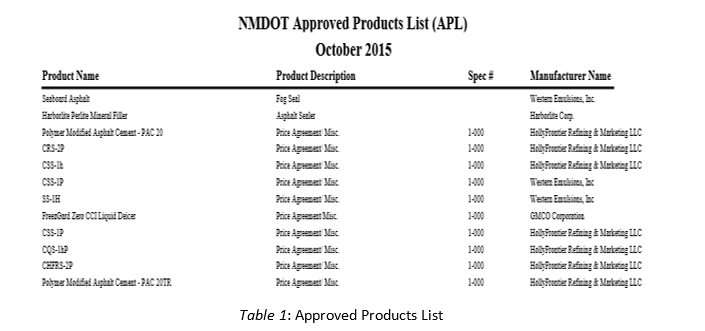
For every military system, component, and
Lowest Replaceable Unit (LRU) an Approved Products List (APL) is created to
account for material baselines within inventory and financial databases. The
APL i a result of configuration management controls
upon approving or modifying engineering plans. The process enhances the
logistics and supply chain manager’s ability to track products, account for
obsolescence, and maintain purchasing accuracy. The APL exhibited above
reflects a New Mexico APL however, demonstrates the same purpose of DoD and
corporate APLs. The unique cataloging differences include nomenclature, model,
and part numbers.
Returns Processing
Handling defective
products may be related to a number of categories related to poor
manufacturing, use of inventory degradation as all corporate policies and
procedures do not equally sustain on-the- shelf materials. Quality control and
inspection functions are an inherent responsibility of logistics and supply
members when managing contracts between suppliers. While Total Quality
Management (TQM) seeks zero defects, three defects per million is an allowable
margin of error. Inventory degradation can include uncharged batteries,
chemical byproducts leaking, or a lack of special packaging instructions to
support specialty and fragile items.
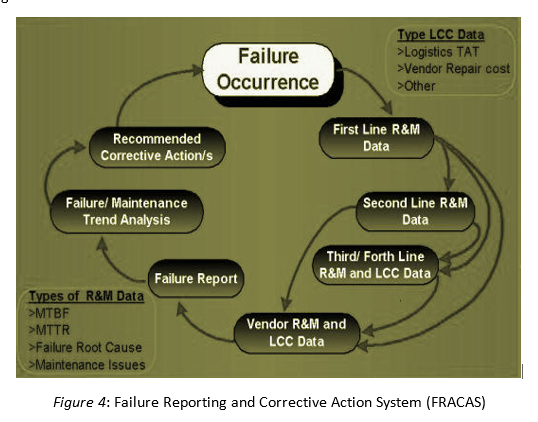
Each organizational
SCM activity holds the responsibility to measure failures and continuously
improv the product baseline by taking corrective action. The FRACAS flow chart
illustrated above represents reliability and maintainability data collected
through testing measures. Failures are tracked to accoun
for the Mean Time Before Failure (MTBF) and Mean Time to Repair (MTTR). These
metrics feed product configuration changes. For example, working in a program
several years ago I found that server racks did not contain slide rails on
several naval ships forcing three sailors versus one to complete the
installation and removal of servers, routers, and Uninterruptible Power
Supplies
(UPSs). Because of cost burdens and program
delays the program manager accepted the risk and installed new cyber systems on
18 ships prior to the forced correction of the issue. The corrective action
included a cost of over $10 million versus the original $1 million accompanied
by a one-month installation delay. Secondly, the loss of productivity among
sailors serving on the 18 ships was estimated at over 4,374 hours in conducting
unneeded maintenance efforts.
Fulfillment Strategies
The order
fulfillment process is a delicate balancing act between managing the
organization’s strategi goals and ensuring the most
optimized process for quality products delivered to
consumers. Distinguishing the order
fulfillment process is predicated upon a strong supply chain foundation that
enhances the organizational business model, product life cycle, and marketing
mix. The order fulfillment process is an
integrated chain that embodies the receiving, PHS&T, order processing, and
return activities. Each variable is crucial and must be carefully weighed in
employing a successful SCM program.
References
Fawcett, S., Ellram,
M. L., & Ogden, J. A. (2007). Supply chain management: from vision to
implementation. Upper saddle River, New Jersey: Pearson Education, Inc.
Copyright 2020 // Grantham University