Information Technology Project Management – Week #4 Lecture
What is Project Scope Management?
●
Scope refers to what should be
included in a project. The scope also
refers to what should be excluded from a project. For example, a customer wants a yellow rose
bush, in a wooden pot, that sits on a wrought iron stand. An antique wrought
iron stand is excluded from the scope. The scope is typically
defined in a business case, or the project charter. The scope is usually defined in terms of, descriptions of
deliverables, functionality, data flow, and in technical diagrams.
●
A deliverable is a product produced as part of a project. Deliverables can be hardware, software, or
documentation, such as project artifacts, and training manuals.
●
Project scope management consists of the activities concerned with
identifying and controlling what is or is not included in a project
Project Scope Management
Processes
●
Planning scope is deciding on how the
project’s scope and requirements will be overseen.
●
Requirements
collection is
documenting the descriptions of the features and functions of the products
produced during the project
●
Defining scope is creating a scope statement
by reviewing the business case, project charter, and requirements documents
●
Creating the Work
Breakdown Structure (WBS) is planning tasks to complete towards delivery of each major
project deliverable, by splitting the tasks into manageable tasks and subtasks
●
Validating scope is formalizing acceptance of
the project deliverables by the customer validating that the product contains
all features specified in the requirements documentation.
●
Controlling scope is documenting and overseeing
changes to project scope throughout the life of the project. The aim is for scope changes not to increase
the project cost or schedule.
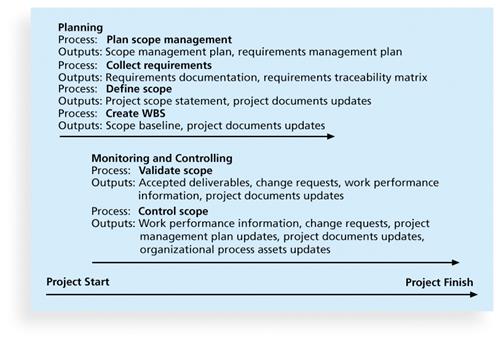
Figure 1 Project Scope Management Summary (Schwalbe, 2015)
Planning Scope Management
●
The scope management plan and the requirements management plan are produced by the project team using expert judgment and
through meetings.
●
The scope management plan is part of the project management plan
Scope Management Plan Contents
The scope management plans
contain procedures for how to prepare a project scope statement, how to create
a WBS, how to maintain and approve a WBS, how to obtain formal acceptance of
completed deliverables, and how to control change requests.
Requirements Management Plan
●
The PMBOK® Guide, Fifth Edition, describes requirements as “conditions or
capabilities that must be met by the project or
present in the product, service, or result to satisfy an agreement or other
formally imposed specification (Project Management Institute, 2013).”
●
Requirements describe the features of the final product or service of the project and what it should do.
●
The requirements management plan describes how project
requirements will be analyzed, documented, and managed
Collecting Requirements
●
For some IT projects, requirements are used
throughout the project development to ensure that the project focus remains on
track. The requirements elicitation is
documenting requirements from the customer or users. Requirements analysis is analyzing the
systems and software development needed to fulfill the requirements. Requirements specification is translating the
functional requirements gathered during requirement elicitation into system
specifications. Requirements validation
is the customer or users validating that all requirements initially requested
are in the final product.
●
It is important to use an iterative approach to defining requirements
since they are often unclear early in a project. The cost to correct and issue discovered
during design is much less than if the defect was discovered post product
release. See Figure 2.
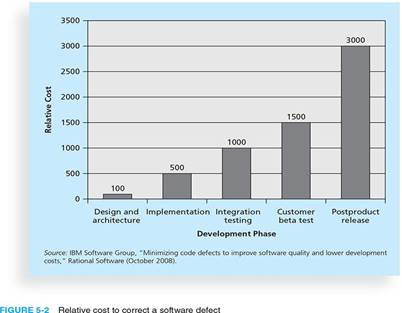
Figure 2 Relative Cost to Correct a Software Requirement Defect
(Schwalbe, 2015)
Methods for Collecting
Requirements
●
Interviewing
●
Focus groups and facilitated workshops
●
Using group creativity and decision-making techniques
●
Questionnaires and surveys
●
Observation
●
Prototyping
●
Benchmarking, or generating ideas by
comparing specific project practices or product characteristics to those of
other projects or products inside or outside the performing organization, can
also be used to collect requirements
Requirements Traceability
Matrix
●
A requirements traceability matrix (RTM) is a table that lists the
functional requirements, corresponding system specifications, and the test
cases that correspond to the functional requirements and system specifications
Defining Scope
●
“Project scope
statements should
include at least a product scope description, product user acceptance criteria,
and detailed information on all project deliverables. It is also helpful to
document other scope-related information, such as the project boundaries,
constraints, and assumptions. The project scope statement should also reference
supporting documents, such as product specifications
●
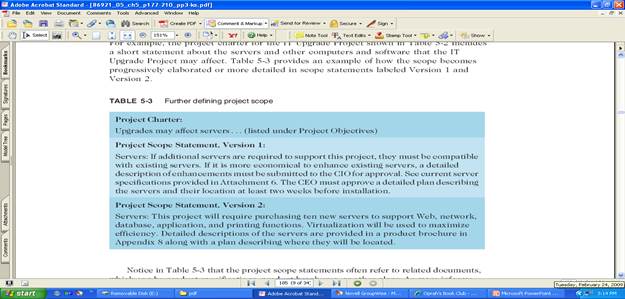
As time progresses, the scope of a project should become more clear and
specific (Schwalbe, 2015).”
Table 1 Sample Project Charter (partial) (Schwalbe, 2015)
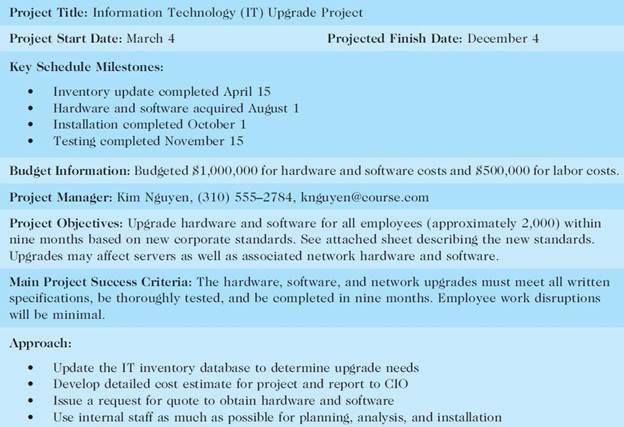
Table 2 Further Defining Project Scope (Schwalbe, 2015)
Creating the Work Breakdown
Structure (WBS)
●
A WBS is a deliverable-oriented document that contains groupings
of the work involved in a project that covers the total scope of the project
●
WBS is a fundamental document that facilitates planning and managing
project schedules, resources, costs, and changes
●
Decomposition is splitting tasks involved in
producing project deliverables into smaller pieces
●
A work package is a task at the lowest level of the WBS
●
The scope baseline includes the approved project scope statement
and its associated WBS and WBS dictionary
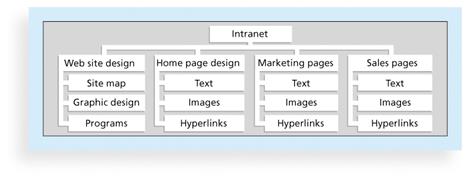
Figure 3 Sample Intranet WBS Organized by Product (Schwalbe, 2015)
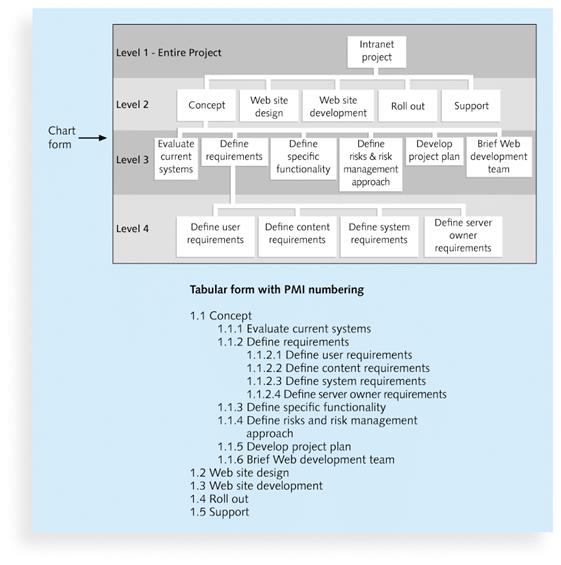
Figure 4 Sample Intranet WBS Organized by Phase (Schwalbe, 2015)
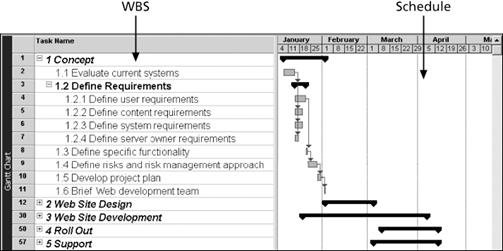
Figure 5Intranet WBS and Gantt Chart in
Microsoft Project (Schwalbe, 2015)
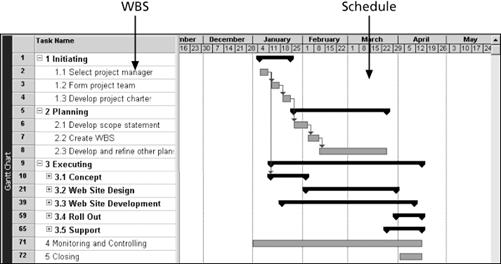
Figure 6 Intranet Gantt Chart Organized by
Project Management Process Groups (Schwalbe, 2015)
Validating Scope
●
“It is very difficult to create a good scope statement and WBS for a
project
●
It is even more difficult to verify project scope and minimize scope
changes
●
Scope validation involves formal acceptance of
the completed project deliverables
●
Acceptance is often achieved by a customer inspection and then sign-off
on key deliverables (Schwalbe, 2015)”
Controlling Scope
●
“Scope control involves controlling changes to the project scope
o
Goals of scope control are to influence the factors that cause scope
changes
o
Assure changes are processed according to procedures developed as part of
integrated change control, and manage changes when they occur
●
Variance is the difference between
planned and actual performance (Schwalbe, 2015)”
References
Project
Management Institute. (2013). A guide to the project
management body of knowledge: (PMBOK® guide). Newtown Square, Pa.: Project
management institute.
Schwalbe, K. (2015). Information technology
project management. Cengage Learning.