Information Systems Project Management – Week 1 Lecture 1
Introduction to Project Management
Some people call them projects. Some call them jobs. Some call them contracts. A project is a temporary sequence of unique, complex, and connected activities having one goal or purpose and that must be completed by specific time, within budget, and according to specification.
Project management is the process of scoping, planning, staffing, organizing, directing, and controlling the development of an acceptable system at a minimum cost within a specified time frame.
Project Management
Overview
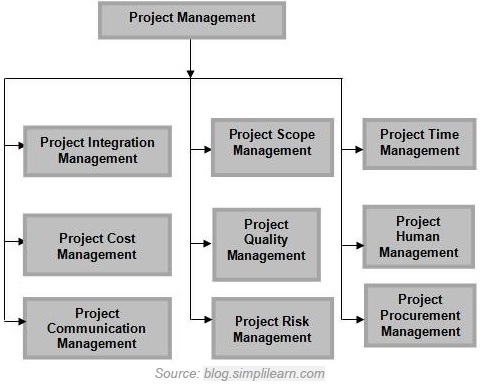
Measures of Project
Success
· The resulting information system is acceptable to the customer.
· The system was delivered “on time.”
· The system was delivered “within budget.”
· The system development process had a minimal impact on ongoing business operations.
Causes of Project
Failure
· Failure to establish upper-management commitment to the project
· Lack of organization’s commitment to the system development methodology
· Taking shortcuts through or around the system development methodology
· Poor expectations management
· Premature commitment to a fixed budget and schedule
· Poor estimating techniques
· Inadequate people management skills
· Failure to adapt to business change
· Insufficient resources
· Failure to “manage to the plan”
Why is Software
Project Management Difficult?
· The product is intangible
· Hard to monitor progress and assess quality
· No clear understanding of the underlying process
· Rely on process models
· Software systems are often ‘one-off’ project
· Critical and innovative in nature
· Makes it hard to accumulate experience and to produce useful data
Project Management
Tools & Techniques
A Program Evaluation and Review Technique (PERT) chart is a graphical network model that depicts a project’s tasks and the relationships between those tasks. A Gantt chart is a simple horizontal bar chart that depicts project tasks against a calendar. Each bar represents a named project task. The tasks are listed vertically in the left-hand column. The horizontal axis is a calendar timeline.
Joint Project
Planning Strategy
Joint project planning (JPP) is a strategy wherein all stakeholders in a project (meaning system owners, users, analysts, designers, and builders) participate in a one-to-three day project management workshop, the result of which is consensus agreement on project scope, schedule, resources, and budget. (Of course, subsequent workshops or meetings may be required to adjust scope, budget, and schedule.)
Project Management
Functions
· Scoping
· Planning
· Estimating
· Scheduling
· Organizing
· Directing
· Controlling
· Closing